Part II · Chapter 4
Comparison, Uncertainty, and Dashboards
Every chart is a comparison — name the baseline, show the spread, and end on a decision, not a pattern.
This chapter argues that a chart's first decision is its baseline, not its color, working throughout with Progresso scanner data — monthly sales across two thousand-plus stores from 2001 to 2006. It moves from January-indexed seasonality to region-by-region small multiples, to confidence intervals that describe store-month variation rather than causal effects, to log-log scatterplots that preview an elasticity-style slope before any regression appears. The payoff is a discipline for dashboards — monitor, diagnose, decide — that ends on the next test to run rather than an attractive pattern. A Bean & Basket capstone then chains grain, joins, metrics, and reshaping into a one-page board memo with its causal limits stated out loud.
Topics covered
In this chapter
- 4.1Baselines, Indexes, and BenchmarksShows how baseline choice — January, a competitor, a region — decides which business pattern a soup-sales chart makes visible first.
- 4.2Small Multiples for HeterogeneityUses same-scale regional panels to test whether the national countercyclical pricing pattern is broad-based or driven by one market.
- 4.3Uncertainty for ManagersTeaches managers to ask what an interval varies over and which decision it changes, since precision is not identification.
- 4.4Statistical Charts Before StatisticsBridges visuals to estimation: skewed volume motivates logs, a log-log scatter previews a −2.46 elasticity, seasonality reveals the confound.
- 4.5Dashboard Decision SystemsRedesigns the soup dashboard into a monitor–diagnose–decide system that ends by naming the next pricing test, not a verdict.
- 4.6Visual Decision Brief StudioSequences the Progresso soup visuals — indexes, small multiples, uncertainty, dashboards — into a one-page executive pricing brief that ends in a decision and names its causal limits.
Interactive studios
Featured data stories
Interactive D3 pieces from the gallery that put this chapter’s chart ideas to work — each opens in a new tab.
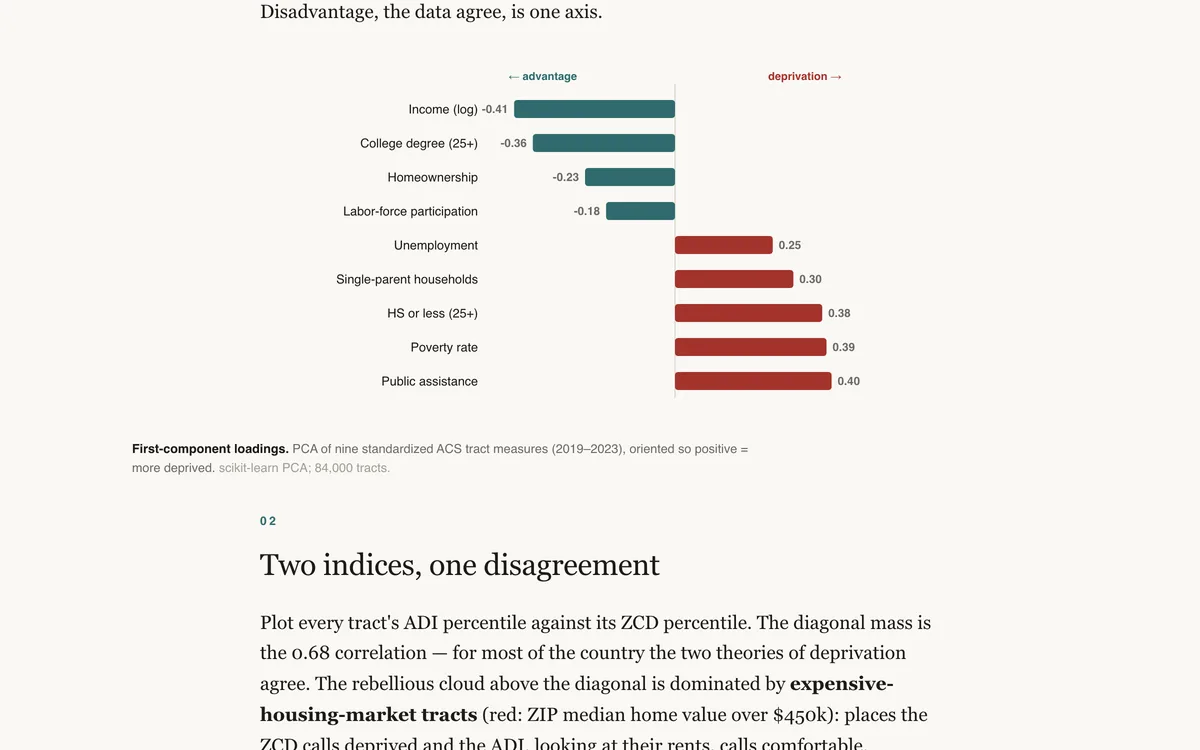 Public OpinionAn Index Autopsy
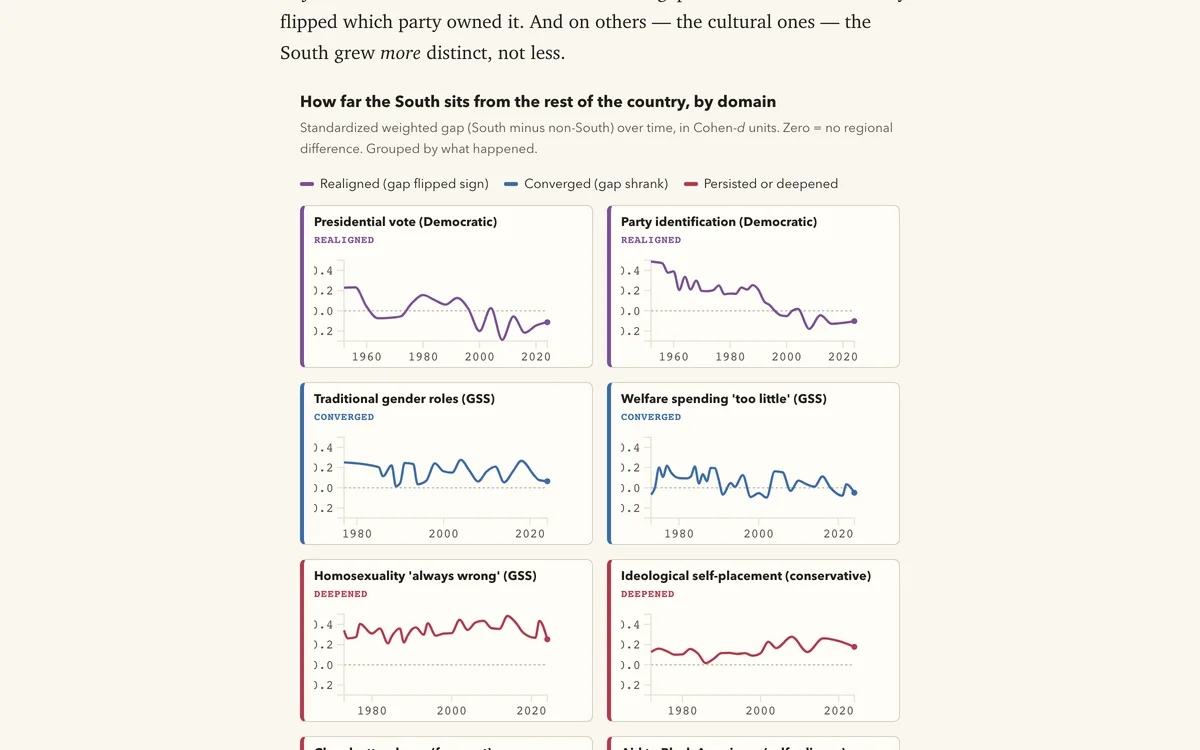 DemographicsOne Country, Two Timelines
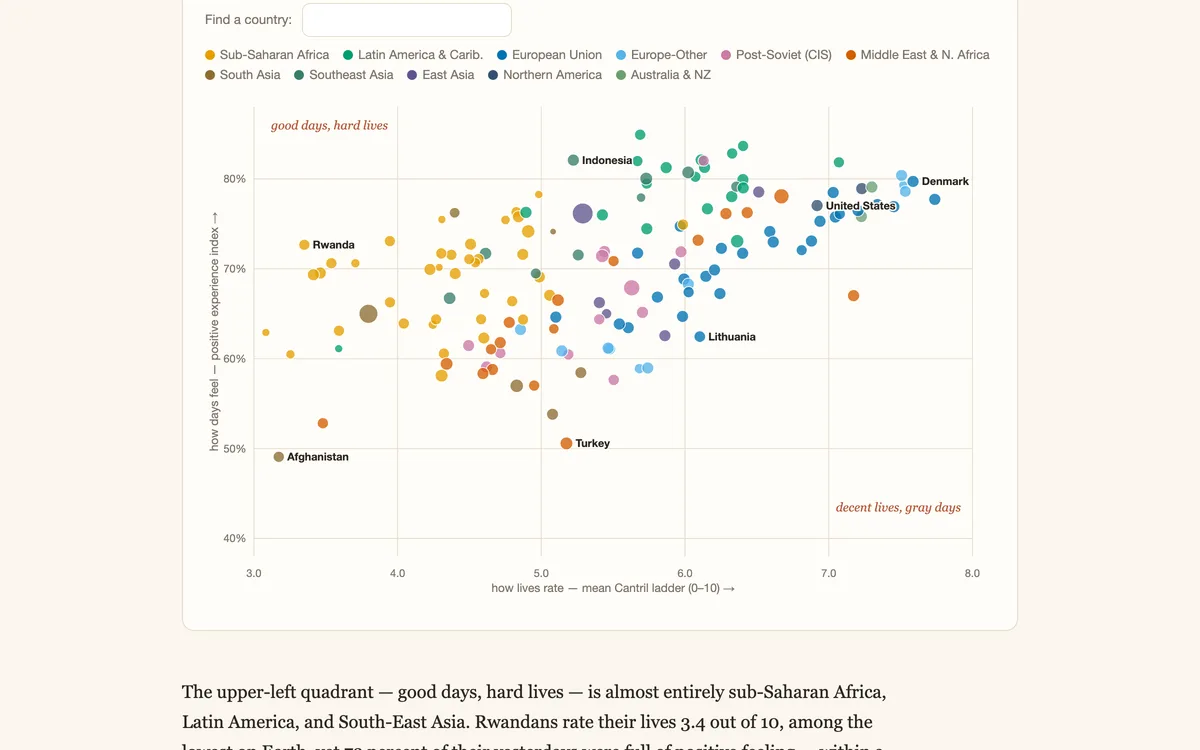 Public HealthSmiles and Ladders: Where Good Days and Good Lives Come Apart
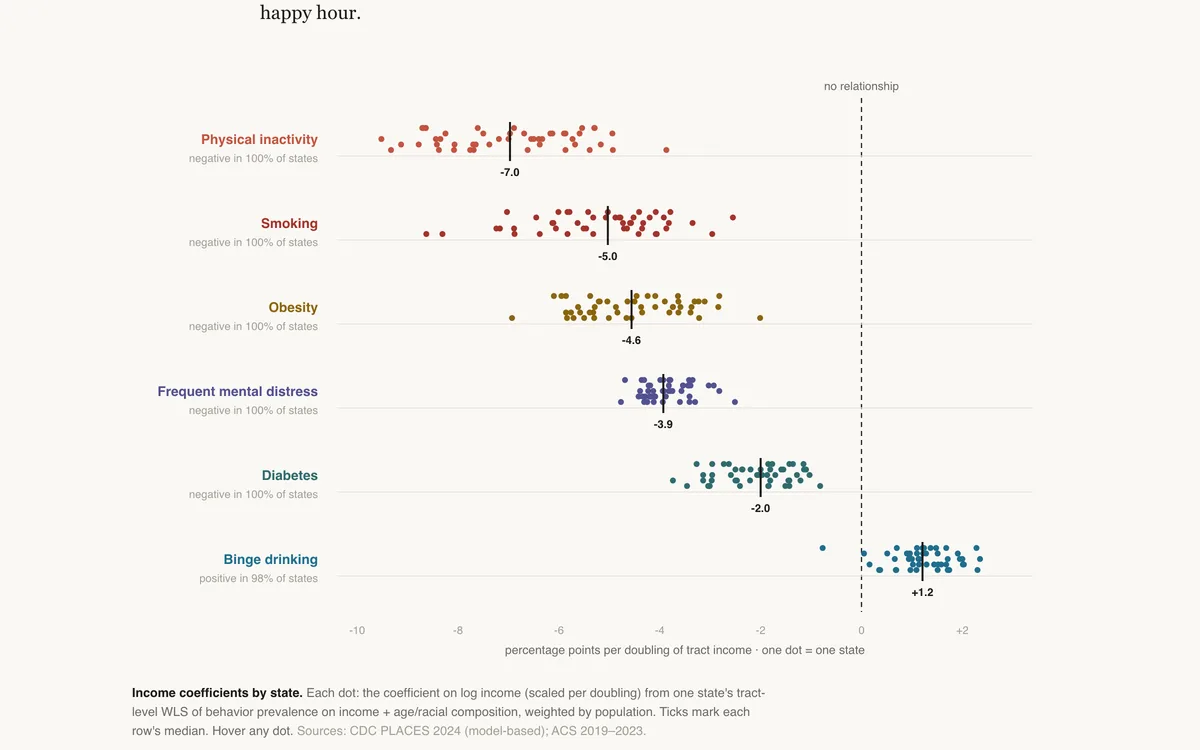 Public OpinionThe Coefficient Zoo
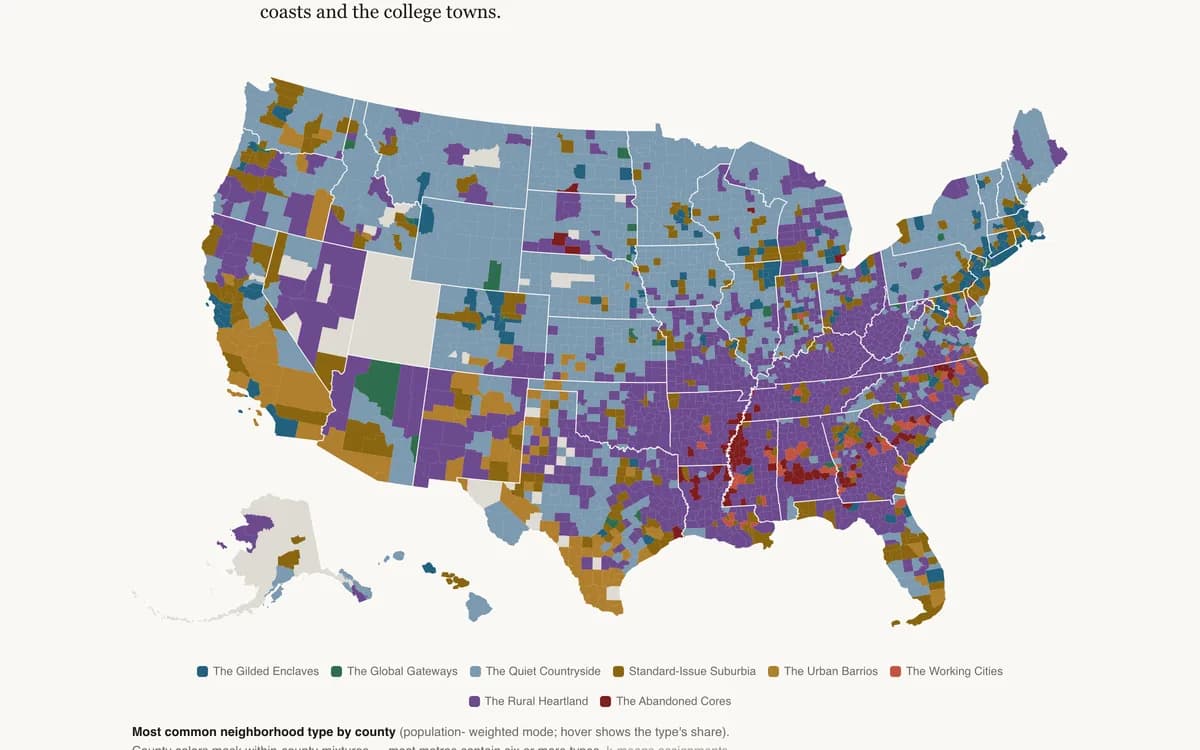 DemographicsThe Eight Americas
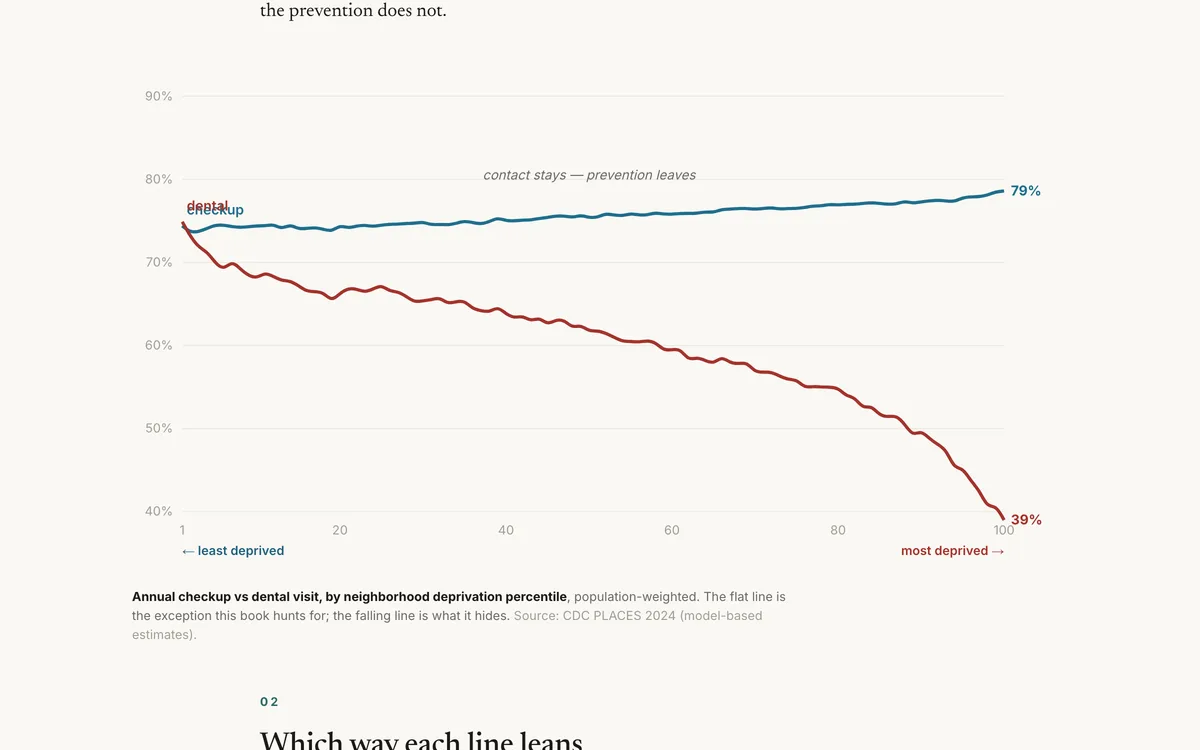 Public OpinionThe Flat Line
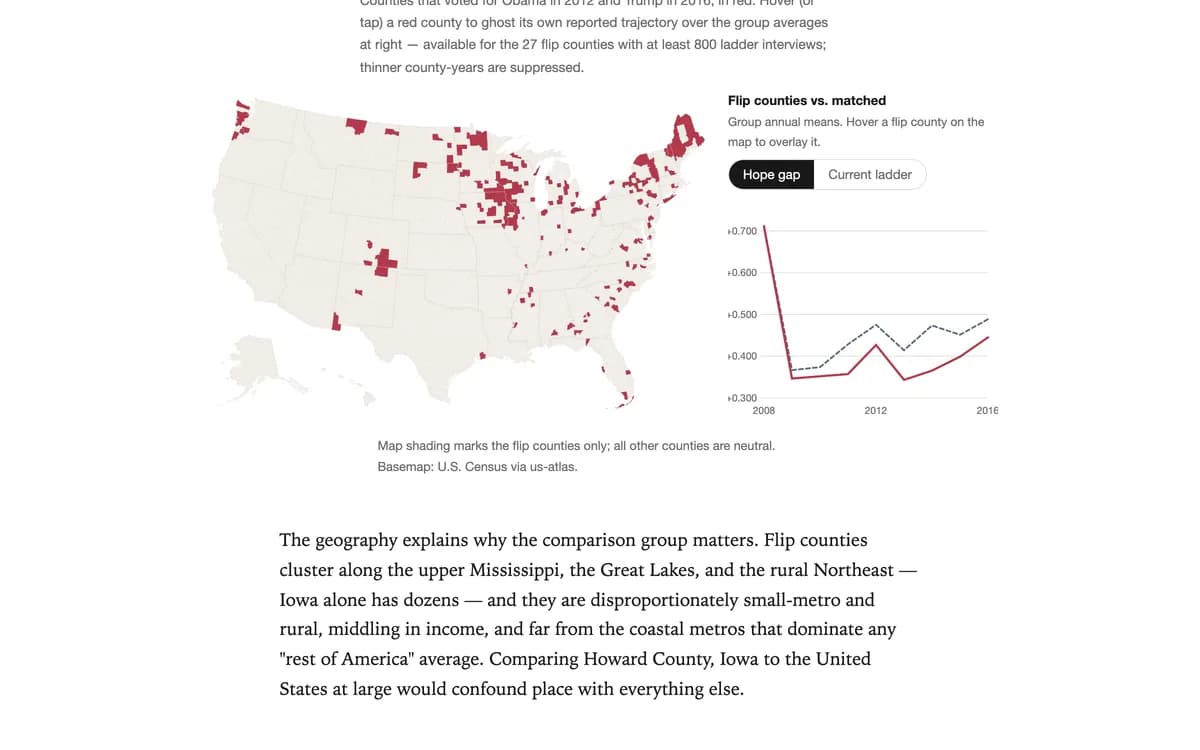 Politics & ElectionsThe Flip Counties Felt It First
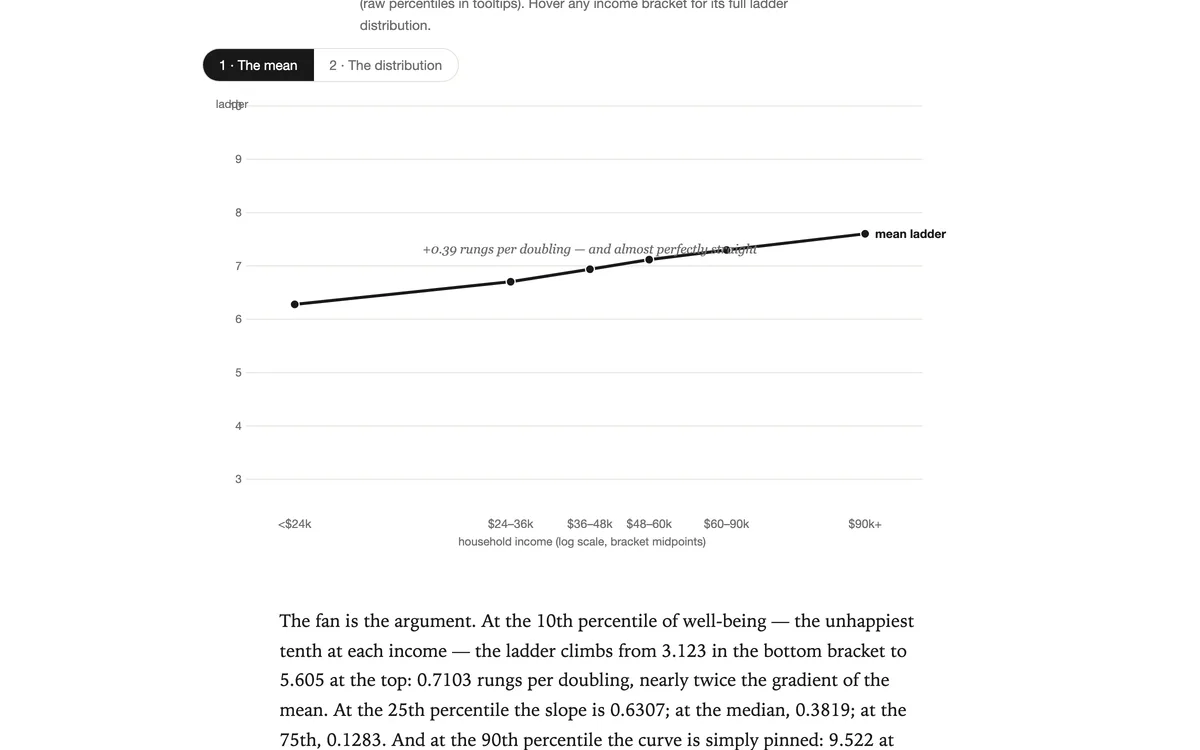 Public OpinionThe Plateau Is in the Tail, Not the Mean
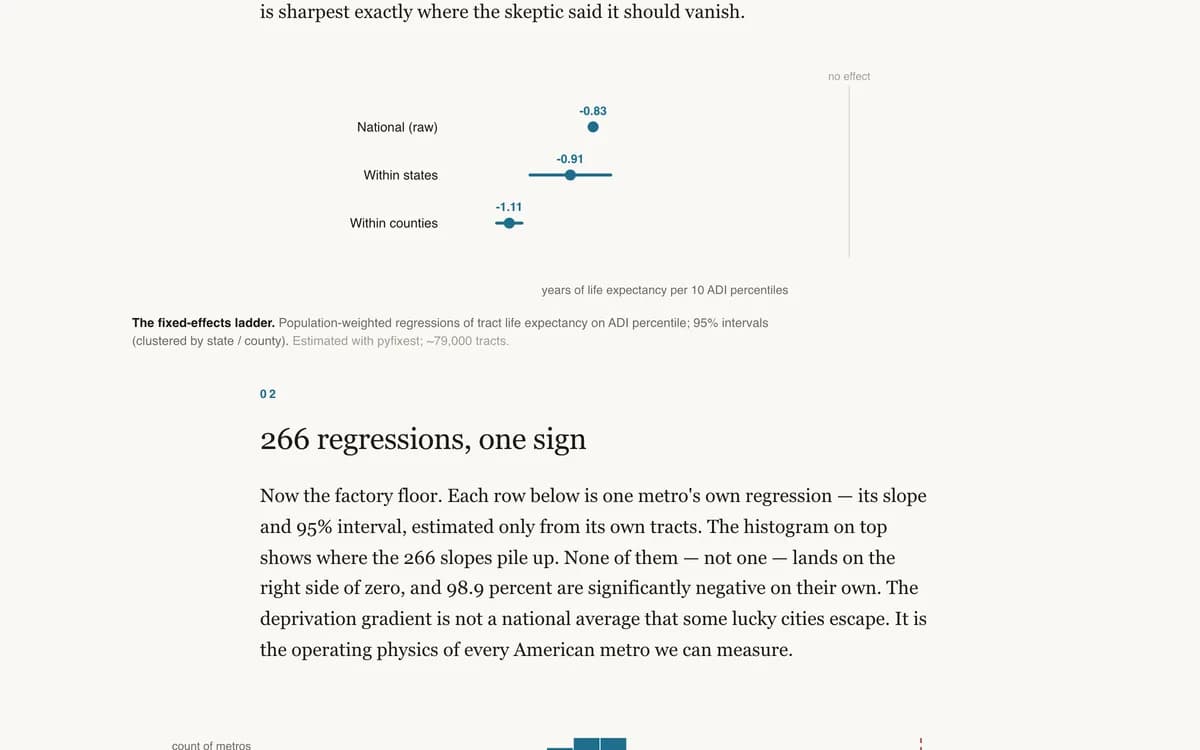 Public OpinionThe Slope Factory
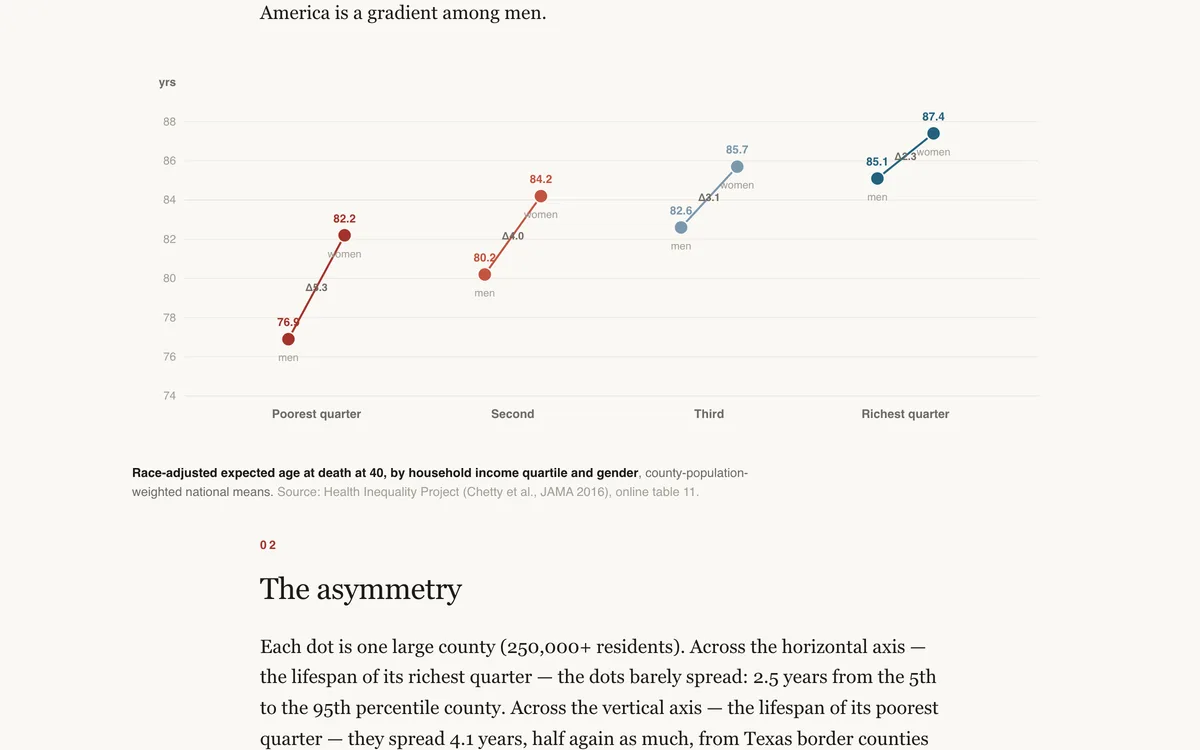 Public HealthWhere It Is Deadliest to Be Poor