Part II · Chapter 3

Chart Grammar for Business Questions

Pick the chart from the question, not the question from the chart — and the definition underneath the metric matters more than the metric.

This chapter treats charts as answers to specific business questions rather than decoration, since the wrong chart quietly overclaims. It opens with the dashboard-as-memo idea — a six-step arc from executive question to KPI tile, trend, breakdown, drilldown, and recommended action — illustrated on the Bean & Basket revenue story. A chart atlas then maps each visual family (distribution, comparison, time, relationship, geography, uncertainty) to a real finding drawn from soup scanner data, county cross-sections, and Zillow housing series. The closing case measures advertising-voice concentration across $369B of ad spend with CR1, CR4, and HHI, and shows that the choice of market and firm boundary, not the metric, decides the answer.

Topics covered

dashboard-as-memo six-step arcquestion-to-chart mappingindexed line chartsKPI tiles with comparisonsexploratory vs. confirmatory drilldownHerfindahl–Hirschman Index (HHI)CR1 / CR4 concentration ratiosmarket-definition sensitivityfirm-boundary (owner vs. brand) aggregation

In this chapter

  1. 3.1Exploratory Visualization and DashboardsFrames a dashboard as a sequenced memo, walking the Bean & Basket revenue story through executive question, KPI, trend, breakdown, drilldown, and action.
  2. 3.2Chart AtlasA translation guide pairing each chart family with a real soup, county, or Zillow finding plus the misuse risk it carries.
  3. 3.3Case Study: Market Concentration MetricsMeasures advertising-voice concentration across industries with CR1, CR4, and HHI, showing market and firm definitions drive the answer more than the metric.

Interactive studios

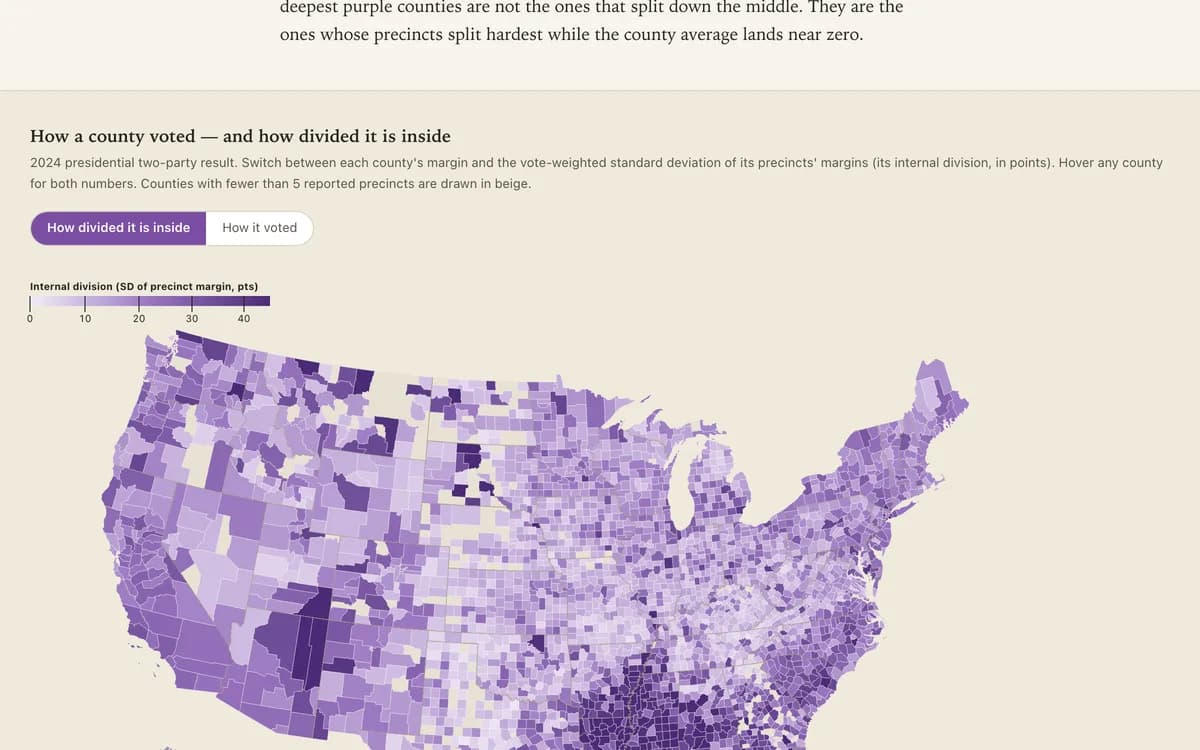
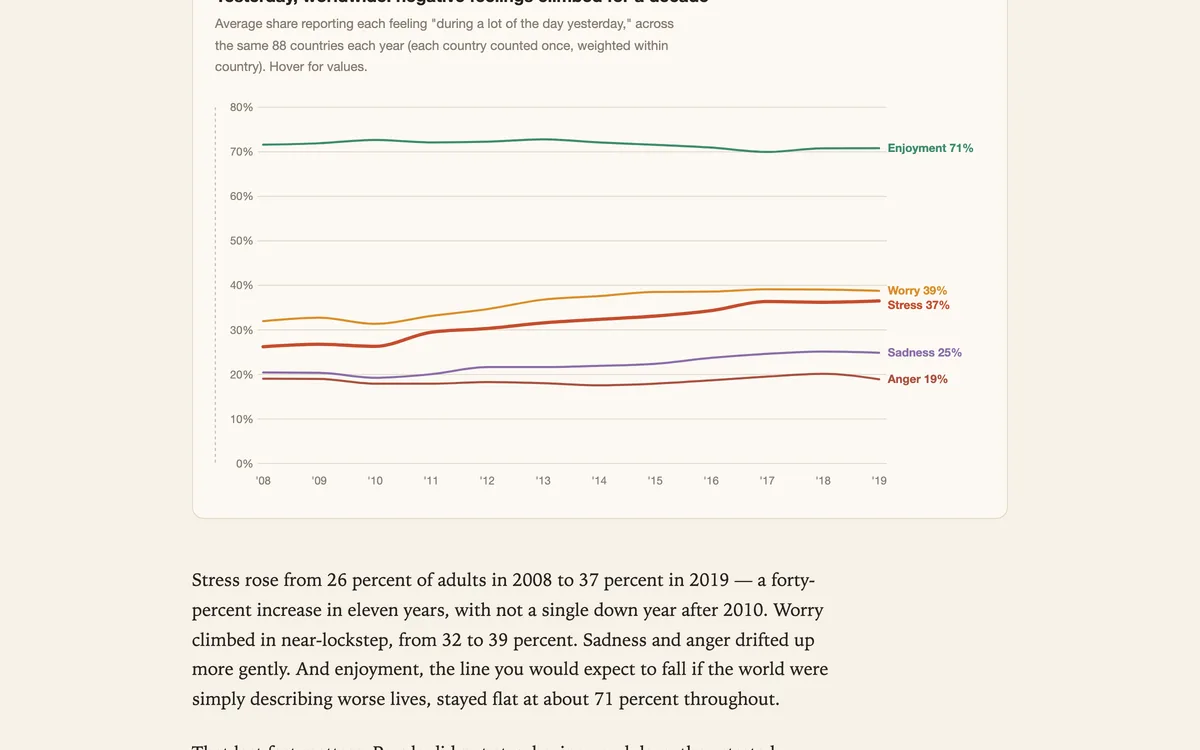
MarketplacesNYC Airbnb: A Listings AtlasExplore tens of thousands of NYC listings by neighborhood, room type, and price — a worked example of how exploratory views turn a raw marketplace dump into a map of where supply and money actually sit.PoliticsPresidential Election Atlas: 1976-2024A state-by-state presidential election dashboard: move across 1976-2024, compare national outcomes, read the hex map, and inspect which states shifted most from the prior election.DemographicsThe Shape of Belief: World Religious CompositionExplore how global religious composition changes from 2010-2050 across regions, faith groups, population shares, and projected growth patterns.Public OpinionAmerica Didn’t Wait for the Unsorted to Die — They SwitchedTrack ANES cross-pressured voters from 1972-2024 to test whether partisan sorting came from generational replacement or switching among existing cohorts.ElectionsAmerica Now Holds One Election, Not 3,100Analyze county presidential returns from 1972-2024 to show the nationalization of county swing, the collapse of local variance, and the shrinking count of flipped counties.Public OpinionAmericans Didn’t Fall in Love With Their Party. They Learned to Despise the Other One.Use ANES feeling thermometers from 1978-2024 to separate in-party warmth from out-party dislike, distributional zeros, and affective polarization.AdvertisingIndustry Ad Spend ExplorerExplore 2018-2022 advertising spend by industry group, advertiser, and media type, with a Covid-era lens on budget shocks, recovery, and media mix shifts.Public OpinionPartisans Finally Got ConstraintRevisit the partisans-without-constraint thesis with ANES issue-scale correlations, party-identification alignment, heatmaps, and sorting decompositions from 1970-2024.ElectionsRich Counties Still Lean Republican Once You Control for DiplomasCombine county returns with ACS and rural-urban measures to show where income, education, ethnicity, and immigration explain the Trump-era county shift.Public OpinionThe Gen Z Gender War Is Real, New — and Half the Size You’ve HeardUse CES 2008-2024 data to size the under-30 gender gap, compare it with older voters, and separate the headline from the racial composition underneath it.Public OpinionThe Great Divergence: Teen Political IdentityTrack how U.S. high school seniors describe their political identity from 1976-2023, with gender gaps, ideological spectrum shifts, and post-2016 decomposition views.Public OpinionThe Great Sorting: How Americans Re-Sorted Into Two PartiesFollow ANES party-identification data from 1952-2024 to see how education, race, class, and religion reshaped the Democratic and Republican coalitions.Public OpinionThe Income Ladder FlippedTrace CES presidential-vote reports from 2008-2024 to see how the classic income gradient inverted and why the richest voters became the most Democratic income group.Public HealthWithin Reach: Teen Drug AvailabilityRead four decades of Monitoring the Future survey data on how available teens think drugs are, comparing substances, grade levels, long-run declines, and 2024 levels.Public OpinionYour County Can’t Change Your Mind: Party Beats Place 8-to-1Pool CES interviews by county context to compare party identity with local red-blue environment across policy issues, showing how little place moves views once party is known.

Featured data stories

Interactive D3 pieces from the gallery that put this chapter’s chart ideas to work — each opens in a new tab.